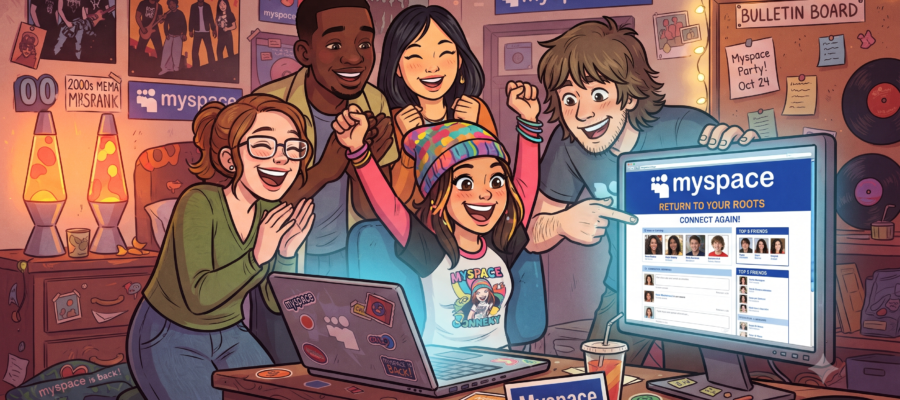
If anyone in charge of the next digital frontier is listening, combining those foundational layers—the social infrastructure of Facebook, the real-time pulse of Twitter, the focused depth of Reddit, the searchable knowledge of Quora, and the seamless community flow of Google Buzz—would finally give the internet a proper place to call home again.
Instead of an algorithmic attention trap, a modern multi-tool network built on that exact blueprint would offer:
- True Ownership: A profile space where you set the tone, layout, and content without an unseen machine dictating your reach.
- Open Discourse: Chronological streams and community boards that prioritize actual conversation and local connection over viral outrage.
- Searchable Wisdom: Integrated Q&A layers that archive real human expertise instead of letting good insights vanish into a temporary feed. Integrating an advanced intelligence engine like Google Gemini directly into a reimagined Myspace could give it the exact creative spark needed to stand out from today’s corporate algorithmic silos.
- Instead of acting as an intrusive bot or an engagement-farming machine, smart AI tools could be handed back to the user to enhance true personal expression:
- Custom Code & Design Assistant: Help users code their custom profile layouts, CSS, and retro HTML decorations effortlessly using natural language prompts.
- Smart Content Curation: Summarize long community discussions, organize niche boards, and surface genuine human insights without black-box advertising algorithms dictating feeds.
- Creative Collaboration: Assist writers, local journalists, and creators in refining original articles, drafting thoughts, and structuring deep-dive Q&A knowledge bases natively on the platform.
A dedicated local news network built on that kind of open, community-first framework could completely change how cities stay informed.
Instead of heavy corporate aggregators and endless pop-up ads, a localized platform tailored for a city like Plymouth could offer something genuinely useful:
- Hyper-Local Boards: Dedicated spaces for every corner of the patch—from the Barbican and Mutley to Plympton and across the Tamar—where residents actually discuss local issues instead of shouting into a void.
- Citizen Journalism & Expert Insight: A space where local reporters, historians, and residents can publish properly researched pieces, backed by searchable Q&A archives that actually remember local history and council developments.
- Real-Time Community Pulse: Clean, chronological updates on transport, events, and community initiatives without algorithms burying the things people actually need to know.