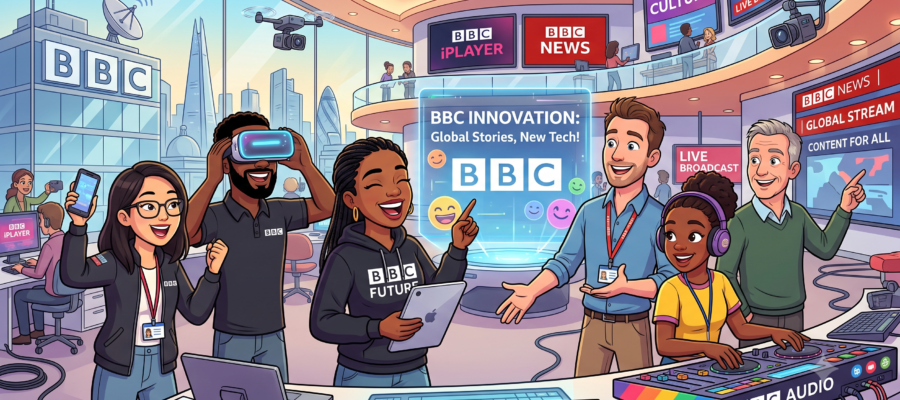
The appointment of former Google UK and Ireland president Matt Brittin as BBC Director-General is one of the biggest strategic shifts the BBC has made in decades. Whether people welcome it or not, it signals that the BBC now sees itself as competing not just with ITV and Sky, but with YouTube, Netflix, TikTok and AI search.
My expectations
📺 The traditional TV licence is unlikely to survive unchanged
The licence fee is under enormous pressure.
- Around half a million fewer households paid the licence in the last year.
- The BBC itself now says the current funding model is no longer sustainable.
- The Government’s Charter Review is examining alternatives before the current Charter expires at the end of 2027.
I don’t necessarily think the licence fee disappears overnight.
Instead I think we’ll see a transition.
Possible options include:
- a household media levy
- a reduced licence fee with commercial income
- optional premium subscriptions
- limited advertising on some services
- charging based on digital consumption rather than television ownership.
What Matt Brittin brings from Google
This is where things become fascinating.
Google spent years understanding:
- how people search
- how audiences discover content
- recommendation algorithms
- AI
- cloud infrastructure
- YouTube
- digital advertising
- audience analytics
Those are exactly the areas where the BBC has been weakest.
I would expect:
1. BBC becomes digital first
Not “TV first with a website.”
Instead:
- articles
- podcasts
- vertical video
- AI summaries
- personalised news
- streaming-first programmes
Television simply becomes one outlet.
2. iPlayer becomes much bigger
Imagine:
- personalised home pages
- AI recommendations
- live local channels
- integrated podcasts
- news clips
- radio
- archives
Essentially Britain’s answer to Netflix.
3. Massive investment in AI
The BBC owns decades of trusted journalism.
AI could:
- answer questions using BBC archives
- generate explainers
- create local news summaries
- translate content
- improve accessibility
That archive is a gold mine.
4. Greater emphasis on local journalism
This interests me most.
Google has long understood that local intent is incredibly valuable.
Instead of one generic UK homepage, imagine:
- BBC Plymouth
- BBC Devon
- BBC Cornwall
- neighbourhood pages
- personalised weather
- transport
- council decisions
- planning applications
- schools
- sport
Hyperlocal journalism could become much stronger.
5. Partnerships
Reports suggest Brittin has already spoken about creating stronger UK streaming partnerships rather than every broadcaster competing alone.
What concerns me
The BBC’s greatest asset is trust.
If it becomes too driven by engagement metrics, it risks chasing clicks rather than public service.
Google has learnt that algorithms alone don’t create trust.
The BBC has traditionally succeeded because editors, not algorithms, make many of the key decisions.
Finding the right balance will be crucial.
What I would do if I were Director-General
A few ideas I’d love to see:
- 📍 Every postcode with its own local news feed.
- 🤖 AI that explains complex news in plain English.
- 📚 A free national education hub for every age.
- 🎙️ Community journalists and photographers contributing verified local stories.
- 🗺️ Interactive maps for planning applications, roadworks, crime trends and local events.
- 🎥 Better use of archive footage, making decades of BBC history searchable by AI.
- 🌍 Stronger collaboration with independent local publishers rather than competing directly with them.
As someone building Plymouth Buzz, this is particularly interesting. If the BBC becomes more open to local partnerships and trusted community contributors, there could be opportunities for high quality independent local journalism to complement national coverage rather than compete with it.
The next two years will be pivotal. By the time the current Royal Charter ends in late 2027, I expect the BBC to look much more like a digital media and AI company that also happens to make television, rather than a television broadcaster that has a website.
Please leave a comment below so that we can create a story together! Thanks
Leave a Reply